Showing posts with label Pricing strategy. Show all posts

Thursday, January 10, 2019

Every Company in Every Industry Has a Walmart Type Competitor

No Need to “Out-Walmart” Your Low-Price Competitors

Walmart type competitors cause a "down economy" for companies that rely on low hanging fruit for their revenue source.  They blame low-price foes for eroding the value that their higher priced products offer.  Not all low-price competitors are as prolific as Walmart, but this type of competitor inspires companies who practice solid marketing principles to thrive while others fall by the wayside.

Read The Entire Post

By John Bernardi

Monday, May 2, 2016

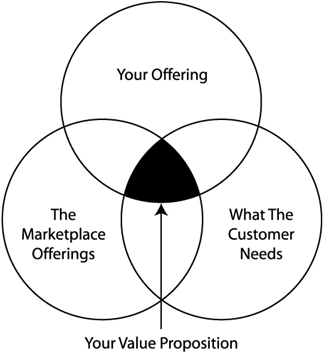
Unique Value Propositions Raise Brands And Proposals To The Next Level

Unique Value Propositions Raise Brands & Proposals To The Next Level

Strong UVPs Guide Buyers Away From Commoditizing Your Business
 

An elevator pitch is your situational sound bite response to someone who asks "what do you do?" Your goal is for them to invite you to discuss what you can do for them.

Without tag lines, puffery or jargon, a Brand UVP introduces a non-price related common ground early in the lead nurturing process. When an important lead becomes "sales-ready", it's time to create the right Proposal UVP.

A strong UVP that is etched into the core of your business will impact everything from back office to front office.

Wednesday, February 25, 2015

Compete Like A Commodity But Win With Value


You Can't Avoid Buyers Who Position You As A Commodity


Their Goal Is To Compel You To Compete On Price


Below the surface you compete as a commodity to generate sales and cash flow.  Above the surface you thrive with an authentic value proposition.


Before Pitching

First, do research and conduct a sales interview to learn about your prospect.  Then, see if you can convince yourself that you have the best solution for them.  If you can't convince yourself, how can you expect to persuade your prospect?  If you proceed with your pitch before establishing emotional value in the mind of the prospect, you'll reinforce the sales stereotype by making it appear that you are interested only in yourself. Develop the patience, confidence and ability to lead with value as opposed to features, benefits and price.


Start with a sales funnel baseline where 80% of your sales opportunities are offered by commodity shoppers while 20% search for underlying value.  Determine how can you profitably compete as a commodity as you continually increase the baseline from its 20% starting point.

Monday, April 28, 2014

"Value For Money" Should Be Your New Pricing Strategy


Value For Money Pricing Strategy

In the 1930's Procter an Gamble and Kellogg's invented the value for money concept. They continue to develop their product strategies around what they consider to be the only three possible B2B or B2C behavioral market segments that exist:

  1. Effectiveness buyers want to do more with the same resources
  2. Efficiency buyers want to do the same with fewer resources
  3. Economizers want to do less with far fewer resources

In the prior economy companies matched the product lifecycle stage with a variety of company-centric pricing strategies such as skimming, penetration, customary, etc. In our new economy all buyers will be driven by one of these three behaviors on an opportunity by opportunity basis, not for all of their purchases.


In order to be ready for the different colored light that is now visible at the end of the economic tunnel, successful companies must develop the competency for
addressing the respective value-for-money behavior for each opportunity that enters their sales funnel.

Tuesday, March 18, 2014

Find Strategic B2B Buyers


Strategic Buyers Disrupt The Status Quo


Successful B2B marketers enhance their position in challenging accounts by conveying valuable insights to strategic buyers who covet growth, competitive advantage, image and productivity.  If you can propel strategic buyers to these goals, you will become part of their sphere of influence.


Invest time learning about the specific objectives a strategic buyer wants to attain. This will give you the confidence needed for making a provocative statement related to what you've learned about them.  And, you will have earned the right to position your targeted price relative to this value.


The last thing that motivates a strategic buyer is the budget.  They will always find discretionary dollars for strategic decisions. Once they have created the strategy umbrella under which actions are implemented, they delegate parameters for tactical buyers to implement.

When Confident That The Die Has Been Cast


Once your value proposition has been adopted by a strategic buyer, help tactical buyers save face. Treat them like strategic buyers and prove your capabilities, demonstrate your expertise, and establish a strong relationship.


This sort of strategic selling, if done consistently throughout your company, will raise the barrier to entry for all competitors in search of your targeted accounts, while helping you to penetrate theirs without them even knowing it.


Wednesday, August 29, 2012

A Lesson On How To Kill Your Brand

Is Your Company Doing What It's Known For?


Not too long ago HP was branded as a technical innovation leader - not by itself, but by its customers.  Its tailored products were expertly aimed at a well-defined target market [not all things to all users]. Prior to 1990 I always marveled at the strong affinity that  customers had with the HP brand.  I learned this from my experience competing directly with HP while working for Texas Instruments and Tektronix.  HP customers were passionate about HP and willing to engage in verbal battles defending HP.  I remember how HP's RPN scientific calculator language created vociferous arguments between HP customers and TI's customers who preferred TI's AOS calculator language.  HP's engineering workstation was the market leader.  HP minicomputers owned the manufacturing automation marketplace. HP OpenView was the leader in IT systems management.

HP always competed on value, never on price.  It's prices were always higher, but perceived value was too. The new HP tries to blend the old HP with its acquisitions - Digital Equipment, Compaq, and others.  Now HP competes on price and tries to sell to everyone.  I don't think HP has that passionate brand appeal of days prior to the 90's.

I'm disappointed to be greeted with a commodityish home page when I visit www.hp.com.  I'm sure Mr. Hewlett and Mr. Packard would feel the same way I feel.

Wednesday, June 6, 2012

Earn The Right To Charge The Price You Want


Premium Prices Are Not An Entitlement

If the best-in-class company in your category charges a prestige or premium price, this doesn't entitle you to position your price near the rim of their price umbrella unless you can match their brand reputation for an excellent customer experience - before, during and after the sale - including the value derived from their products and services.

If you don't exceed the NetPromoter Score acid test of being told that you consistently deliver total satisfaction and can prove it by the frequency referrals you receive, your price is probably too high.

Friday, February 17, 2012

Customers Not Responsible for Your Quota

 
"What can you do to close this sale before the end of the month?

We need this in order to make our quota."

Don't introduce incentives or pressure the customer to sign because it's in your best interest.

Bad things will result if you venture outside the boundaries of making sure that all commitments are up to date [yours, your team's and the buyer's team]. Also logical next steps to manage the opportunity to closure must be mapped out.

By interrupting the natural flow, you will reduce the profitability of the sale, mar the customer relationship and create inefficiencies for your sales reps who need to be working on other opportunities and relationships.

Leverage a sales opportunity's sales cycle. Strengthen the relationship and create an above the funnel entry for the next opportunity.  That's the essence of smart account management.